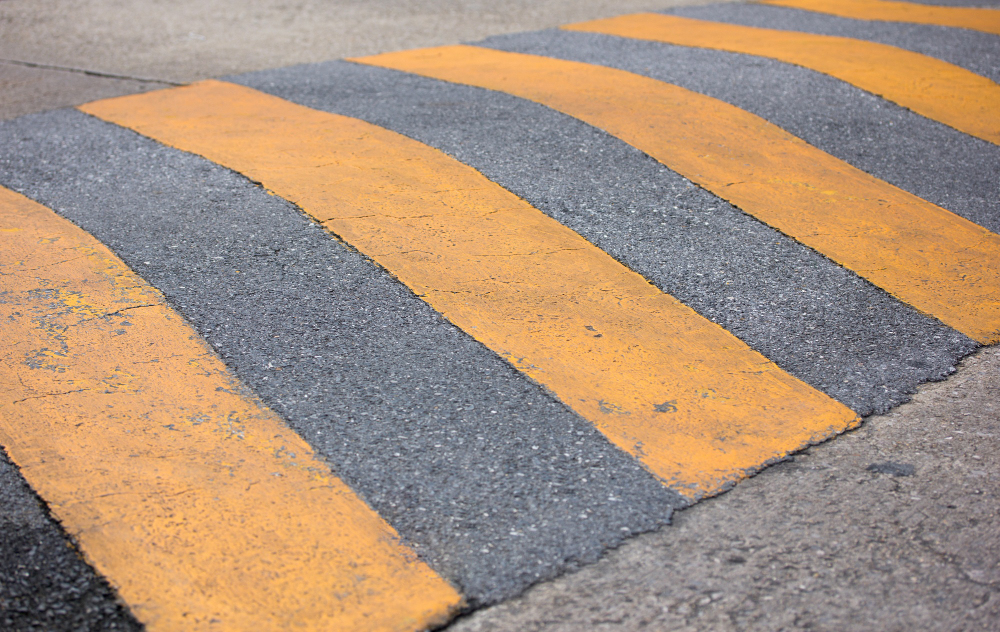
Why Speed Bumps Matter in South Florida
In busy areas like Miami, Kendall, Doral, and Pembroke Pines, speed bumps are essential for preventing collisions in parking lots, schools, condos, and retail centers. With heavy foot traffic and fast-moving vehicles, a properly placed speed bump can reduce accidents by up to 60%.
If your property is seeing speeding issues or near-misses, it may be time to install new speed bumps—or replace old, ineffective ones.
Rubber vs. Asphalt Speed Bumps
Choosing the right material is one of the biggest decisions.
Asphalt Speed Bumps
- Long-lasting
- Seamless look
- Can be repainted easily
- Ideal for HOAs and commercial centers
- Withstands South Florida heat better than rubber
Rubber Speed Bumps
- Fast installation
- No curing time
- Can be removed or relocated
- Good for temporary setups
- Common for schools, events, or shifting traffic patterns
Both have their place, but asphalt remains the preferred option for permanent control.
Placement Guidelines
Proper placement ensures safety and compliance:
- Spacing: typically 100–300 feet apart
- Minimum height: 3–4 inches
- Should be installed perpendicular to the flow of traffic
- Must include reflective striping and signage
- Should be placed near crosswalks and pedestrian entrances
Incorrect placement can cause accidents—or liability issues.
Local Miami Considerations
Because Miami-Dade traffic codes vary by municipality, commercial properties often need:
- Site evaluation
- Traffic flow assessment
- ADA review
- Compliance with engineering standards
HOAs also rely on professional installation to avoid damage to emergency vehicles or resident complaints.
Speed Bump Installation Timeline
A typical asphalt speed bump installation takes:
- 2–4 hours of on-site work
- 1–3 hours of drying time
- Same-day striping in most cases
Rubber speed bumps can be installed in under an hour.
When You Should Install New Speed Bumps
Frequent Speeding Complaints
When property managers or residents report repeated speeding issues, it’s a clear sign that vehicles aren’t naturally slowing down in high-risk areas. Installing speed bumps helps control traffic flow and reduce dangerous driving behavior.
Pedestrian Near-Misses
If people frequently report close calls with moving vehicles, your property needs immediate intervention. Speed bumps force drivers to reduce speed, creating a safer environment for shoppers, residents, and employees.
Poor Visibility Areas
Blind spots, dim lighting, sharp turns, and narrow drive lanes can all contribute to accidents. Adding speed bumps in these zones encourages drivers to approach more cautiously, reducing the risk of collisions.
Parking Lots with Cut-Through Traffic
Some drivers use commercial or residential parking lots as shortcuts to avoid busy intersections. Speed bumps deter this behavior by slowing vehicles down and redirecting them to proper roadways.
Old Rubber Bumps That Peel or Detach
Aging rubber speed bumps can loosen, shift, or separate from the pavement. These hazards can damage vehicles, trip pedestrians, and reduce traffic control effectiveness, making replacement necessary.
Asphalt Bumps with Cracks or Potholes
Deteriorating asphalt bumps lose their shape and fail to slow vehicles effectively. Cracks, potholes, and crumbling edges also increase liability and create unsafe driving conditions, signaling the need for new installation.
Replace Speed Bumps Every Few Years
Replacing speed bumps every few years keeps liability low and safety high. Speed bumps slow vehicles and protect pedestrians. Asphalt bumps last longer, while rubber bumps install quickly. Miami speed bump installations usually take under 1 day.
Speed Bumps for Parking Lots in Miami FAQ’s
What’s the difference between speed bumps and speed humps?
Speed bumps are higher and more aggressive, used in parking lots. Speed humps are longer and lower, used on residential streets.
Are asphalt or rubber speed bumps better?
Asphalt is best for permanent solutions. Rubber is good for temporary or fast installations.
Do speed bumps require permits in Miami?
Commercial properties usually need a site evaluation, and some municipalities require engineering review before installation.
How long does it take to install a speed bump?
Asphalt bumps install in a few hours plus curing time. Rubber bumps can be installed in under an hour.
How high should a speed bump be?
Standard height is 3–4 inches, which slows cars while maintaining driveability.
Do speed bumps damage vehicles?
No—when installed correctly and properly marked, they slow cars safely without causing damage.
How often should speed bumps be repainted?
In Miami’s climate, repainting is typically needed every 6–12 months, depending on traffic.