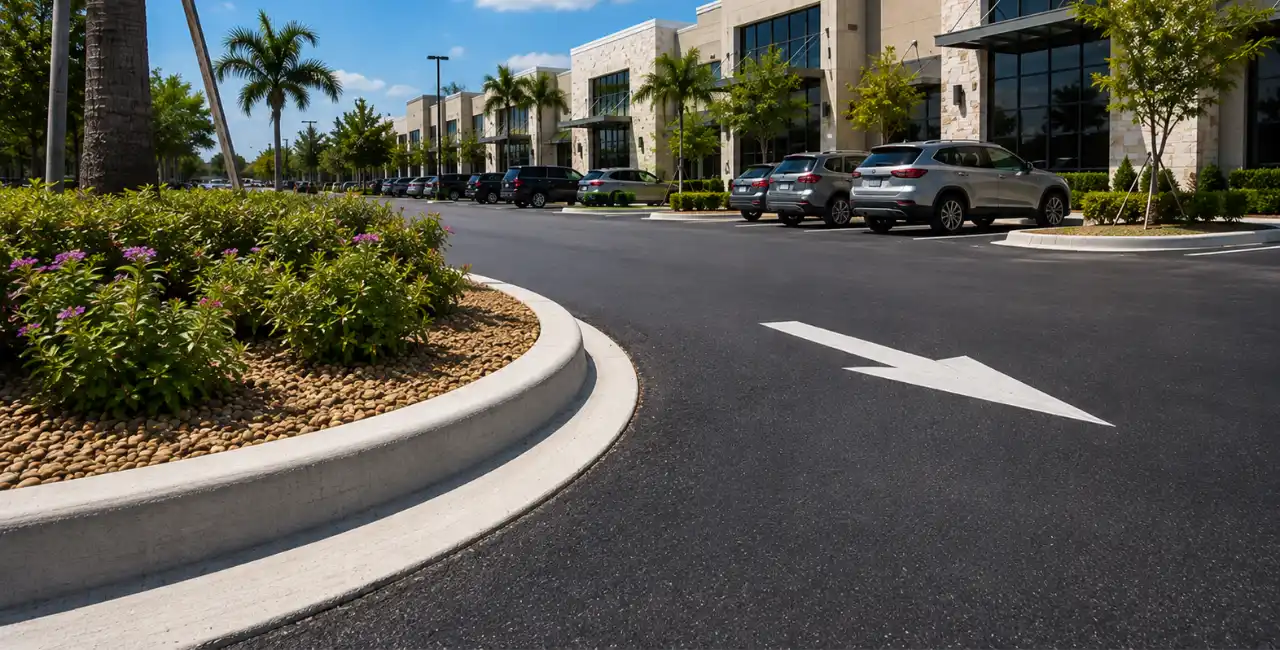
Commercial properties are judged long before customers walk through the front door. A well-maintained parking lot, clearly defined walkways, and professional landscaping all contribute to a positive first impression. While many property owners focus on asphalt paving or exterior aesthetics, concrete curbing is one feature that often goes unnoticed – until it starts to fail.
Concrete curbing plays a critical role in protecting pavement, directing traffic, improving drainage, and creating a polished appearance. Whether you manage a retail shopping center, office complex, industrial facility, hospital, or HOA community, investing in quality concrete curbing can improve both the functionality and value of your property.
Companies like Southern Asphalt Engineering specialize in commercial paving, parking lot restoration, concrete services, ADA-compliant improvements, pavement maintenance, and engineering design for commercial, municipal, industrial, and professionally managed properties throughout South Florida. Their integrated approach ensures every component of a parking lot, including concrete curbing, works together for long-term performance.
What Is Concrete Curbing?
Concrete curbing consists of durable concrete barriers installed around parking lots, roadways, sidewalks, landscaped islands, and loading areas. These curbs create clear boundaries while helping control vehicle movement, stormwater flow, and pedestrian safety.
Unlike temporary edging materials, professionally installed concrete curbs are designed to withstand constant traffic, changing weather conditions, and years of daily use. They also complement other commercial paving services, including asphalt installation, pavement restoration, striping, sidewalks, and ADA-compliant improvements.
Why Concrete Curbing Matters for Commercial Properties in Miami
Commercial parking lots experience heavy vehicle traffic every day. Without properly installed curbs, pavement edges can deteriorate faster, landscaping can become damaged, and water drainage problems may develop.
Concrete curbing creates a structured layout that protects your investment while improving the overall appearance of the property. For businesses that rely on customer visits, maintaining an organized exterior can positively influence visitors’ first impressions and reduce future maintenance costs.
Key Benefits of Concrete Curbing
1. Protects Asphalt Pavement
One of the biggest advantages of concrete curbing is pavement protection.
The edges of asphalt surfaces are often the weakest areas. When vehicles drive over unsupported pavement edges, cracking and crumbling can develop quickly. Concrete curbs provide structural support that helps preserve pavement integrity and extend its lifespan.
When combined with regular pavement maintenance, crack sealing, and sealcoating, curbing helps maximize the return on your paving investment.
2. Improves Traffic Organization
Parking lots without clearly defined boundaries often experience:
- Vehicles cutting across landscaped areas
- Improper parking
- Confusing traffic flow
- Increased accident risk
Concrete curbs create designated driving lanes, parking islands, and pedestrian zones, helping motorists navigate the property more safely and efficiently.
3. Enhances Property Appearance
Curb appeal matters for every commercial property.
Neatly installed concrete curbs create clean lines around landscaped islands, sidewalks, entrances, and parking areas. They give the property a professional appearance that reflects positively on the business.
For shopping centers, office parks, hotels, healthcare facilities, and municipalities, attractive exterior infrastructure helps create a welcoming environment for visitors.
4. Supports Better Drainage
Proper drainage is essential for preserving asphalt and preventing water damage.
Concrete curbs help channel rainwater toward drainage systems rather than allowing water to collect across parking lots. Effective drainage reduces standing water, minimizes pavement deterioration, and lowers the risk of potholes forming over time.
Engineering-based site planning often considers drainage alongside pavement design to improve long-term performance.
5. Protects Landscaping
Commercial landscaping represents a significant investment.
Concrete curbing keeps vehicles from driving onto grass, flower beds, shrubs, and decorative islands. It also prevents mulch and soil from washing onto paved surfaces during heavy rain.
This protection helps reduce landscaping maintenance while maintaining a cleaner appearance year-round.
6. Improves Pedestrian Safety
Concrete curbs create a physical separation between pedestrians and moving vehicles.
They define sidewalks, walking paths, and crossings while helping direct foot traffic toward designated safe areas. Combined with ADA-compliant sidewalks, ramps, striping, and signage, concrete curbing contributes to a safer commercial environment for employees, customers, and visitors.
7. Reduces Long-Term Maintenance Costs
Although concrete curbing requires an initial investment, it often lowers maintenance expenses over time by:
- Protecting pavement edges
- Preventing erosion
- Reducing landscape damage
- Improving drainage
- Minimizing asphalt repairs
Instead of replacing damaged pavement prematurely, property owners can preserve existing infrastructure with proper curb installation and routine maintenance.
Commercial Properties That Benefit Most
Concrete curbing provides value across many industries, including:
- Retail shopping centers
- Office complexes
- Industrial facilities
- Apartment communities
- Hospitals
- Schools
- Hotels
- Municipal properties
- HOA communities
- Distribution centers
Large parking areas especially benefit from professionally designed curb systems that improve organization and durability.
When Should Concrete Curbs Be Replaced?
Like any exterior infrastructure, concrete curbs eventually wear out.
Common signs include:
- Large cracks
- Broken sections
- Vehicle impact damage
- Settling
- Drainage problems
- Loose or crumbling concrete
Ignoring damaged curbs can allow pavement deterioration to spread into surrounding asphalt, increasing repair costs.
If your parking lot already requires resurfacing or restoration, replacing damaged curbs at the same time often provides the most cost-effective solution.
Why Professional Installation Matters
Concrete curbing must be properly planned and installed to deliver long-term performance.
Experienced contractors evaluate factors such as:
- Existing pavement conditions
- Drainage requirements
- Traffic patterns
- ADA accessibility
- Soil stability
- Long-term maintenance needs
Southern Asphalt Engineering combines engineering expertise with asphalt restoration, concrete construction, pavement maintenance, parking lot improvements, traffic striping, and ADA compliance services to deliver comprehensive commercial infrastructure solutions throughout Miami, South Florida. Their engineering-first approach helps ensure every project is designed for durability, safety, and long-term value.
Strengthen Your Property with Professional Concrete Curbing
Concrete curbing is much more than a decorative border around a parking lot. It serves as an essential part of commercial property infrastructure by protecting pavement, improving drainage, organizing traffic, enhancing safety, and preserving landscaping.
When integrated with professional asphalt paving, pavement restoration, parking lot maintenance, sidewalks, and ADA-compliant improvements, quality concrete curbing helps commercial properties remain attractive, functional, and cost-effective for years to come.
For property owners looking to maximize the lifespan of their parking lots while presenting a professional appearance, investing in durable concrete curbing is a practical long-term decision that supports both safety and property value.
FAQs
What is concrete curbing used for in commercial properties?
Concrete curbing is used to create boundaries around parking lots, sidewalks, landscaped areas, and roadways. It helps control traffic flow, improve drainage, protect pavement edges, and maintain a clean, organized property appearance.
How does concrete curbing protect commercial parking lots?
Concrete curbing supports asphalt edges and prevents vehicles from damaging pavement boundaries. It reduces cracking, erosion, and edge deterioration, helping extend the lifespan of commercial parking surfaces.
Can concrete curbing improve drainage on commercial properties?
Yes. Properly installed concrete curbing helps direct stormwater toward designated drainage areas, reducing standing water, preventing erosion, and minimizing pavement damage caused by poor water management.
Is concrete curbing a good investment for commercial properties?
Yes. Concrete curbing provides long-term benefits by reducing maintenance needs, protecting landscaping, improving safety, and enhancing the overall appearance and functionality of commercial properties.
How long does concrete curbing last?
The lifespan of concrete curbing depends on installation quality, weather conditions, traffic exposure, and maintenance. Professionally installed concrete curbs can provide many years of reliable performance with proper care.