Commercial pavement plays an essential role in maintaining the safety, accessibility, and appearance of business properties. From shopping centers and office complexes to condominium communities and industrial facilities, well-maintained asphalt surfaces help create a positive first impression while supporting everyday vehicle and pedestrian traffic. However, Florida’s intense sunlight, heavy rainfall, humidity, and regular traffic can gradually weaken pavement, leading to cracks, potholes, and drainage problems.
For property owners and managers, investing in timely commercial pavement repair in North Miami Beach can help prevent minor surface defects from becoming expensive structural issues. Understanding the available asphalt repair solutions, maintenance practices, and long-term benefits makes it easier to protect commercial investments and maintain functional outdoor spaces.
Why Is Commercial Pavement Repair Important?
Commercial parking lots and roadways experience constant wear from passenger vehicles, delivery trucks, and changing weather conditions. Over time, asphalt can develop surface cracks, depressions, loose aggregate, and potholes that compromise its performance.
Ignoring these warning signs may allow water to penetrate the pavement and weaken its underlying base. Inadequate drainage can accelerate deterioration, increasing repair costs and potentially creating hazards for customers, employees, residents, and visitors.
Professional pavement maintenance helps property managers address these problems before they require extensive reconstruction. Companies such as Southern Asphalt Engineering provide commercial asphalt paving, restoration, and maintenance solutions for properties throughout Miami-Dade and Broward counties.
Their experience in asphalt services helps property owners evaluate suitable options for maintaining parking lots, private roadways, and other paved areas.
What Are the Main Commercial Pavement Repair Solutions?
Different pavement problems require different repair methods. Selecting the appropriate solution depends on the condition of the asphalt, the extent of the damage, traffic requirements, and the strength of the underlying pavement structure.
1. Asphalt Patching and Pothole Repair
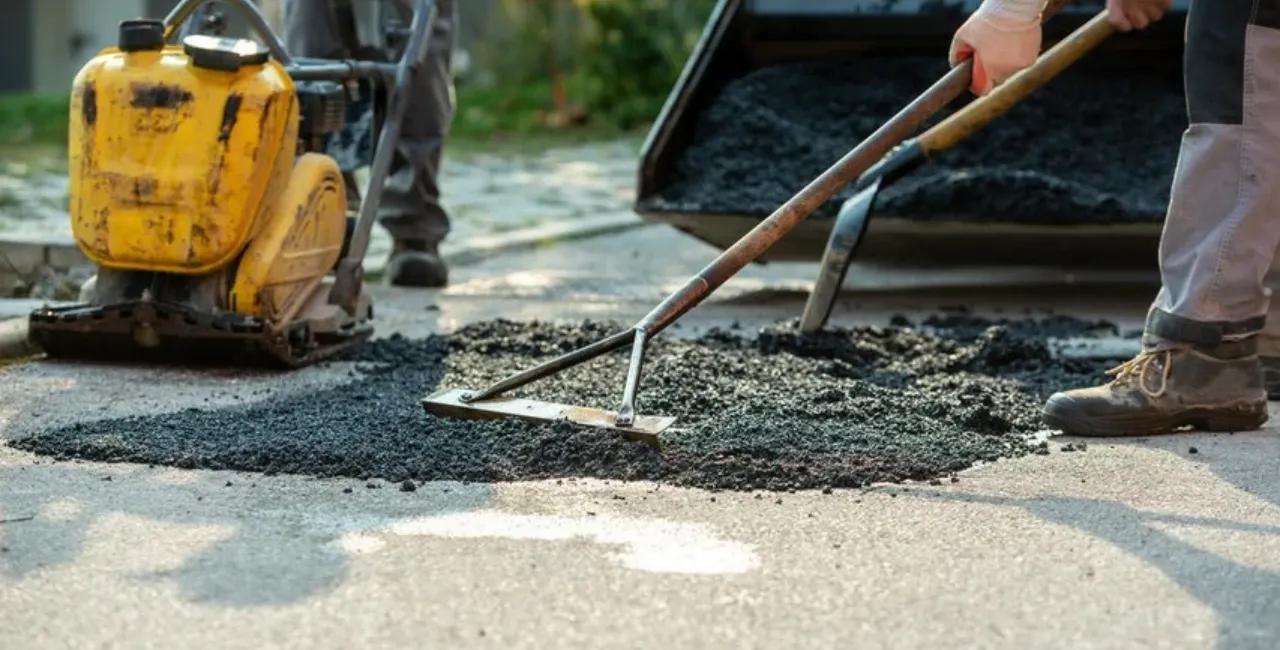
Asphalt patching is commonly used to repair localized damage, including potholes, deteriorated sections, and surface imperfections. Depending on the severity of the problem, contractors may remove damaged material, prepare the affected area, and install properly compacted asphalt.
Timely pothole repair helps restore a smoother driving surface and reduces the risk of further deterioration. It is particularly valuable for busy commercial parking lots, shopping plazas, apartment complexes, and industrial access roads.
2. Asphalt Milling and Resurfacing
When an asphalt surface has widespread wear but retains a structurally sound base, milling and resurfacing may provide an effective restoration option. Milling removes the deteriorated upper layer, allowing a fresh asphalt surface to be installed.
This process can improve pavement appearance, ride quality, and usability without automatically requiring complete reconstruction. A professional site assessment helps determine whether resurfacing is appropriate or whether deeper structural repairs are necessary.
3. Asphalt Overlay and Preventive Maintenance
An asphalt overlay adds a new layer of asphalt over an existing pavement surface that is suitable for rehabilitation. It can improve surface uniformity and extend pavement service life when the underlying structure is stable and drainage conditions are properly addressed.
Preventive maintenance, including crack repair and appropriate sealcoating, also helps limit moisture intrusion and protect asphalt from environmental exposure. These treatments are most effective when applied at the right stage of pavement deterioration.
4. Parking Lot Striping and Concrete Repairs
Pavement restoration involves more than repairing asphalt. Clearly marked parking spaces, directional arrows, accessible parking spaces, and traffic markings help organize vehicle movement and improve property usability.
Concrete curbs, gutters, sidewalks, and walkways may also require repairs to maintain drainage and pedestrian access. Coordinating these services with asphalt maintenance can help property managers maintain a consistent, functional site.
What Do General Pavement Statistics Tell Property Owners?
Understanding typical pavement performance can help commercial property owners plan maintenance budgets and evaluate long-term repair strategies.
| Pavement statistic | General figure | What it means |
| Typical asphalt pavement lifespan | Approximately 15–20 years | Actual service life depends on construction quality, traffic, drainage, and maintenance. |
| Potential benefit of preventive maintenance | Can extend pavement service life | Timely crack repairs and appropriate protective treatments may slow deterioration. |
| Crack repair timing | As soon as practical after cracks are identified | Helps reduce water infiltration and prevent damage from spreading. |
How Does South Florida’s Climate Affect Commercial Asphalt?
North Miami Beach properties face environmental conditions that can accelerate pavement deterioration. Strong ultraviolet exposure can contribute to asphalt aging, while heavy rainfall may exploit existing cracks and poorly drained areas.
Standing water is particularly concerning because it can weaken pavement layers and contribute to pothole formation. Frequent vehicle movements and heavier commercial traffic can further stress vulnerable sections.
Effective commercial asphalt maintenance should therefore include drainage evaluations, timely crack sealing, inspection of high-traffic areas, and prompt repairs. Contractors should also assess pavement foundations before recommending surface treatments, since cosmetic repairs alone cannot resolve underlying structural failures.
How Can Property Owners Choose the Right Pavement Contractor?
Selecting an experienced contractor involves more than comparing initial estimates. Property managers should consider licensing and insurance, relevant commercial project experience, repair recommendations, project scheduling, and the scope of work included in the proposal.
A reliable contractor should explain whether patching, milling, resurfacing, an asphalt overlay, or reconstruction best suits the property’s condition. Clear scheduling and phased construction may also help minimize disruptions to tenants, customers, employees, and deliveries.
Companies like Southern Asphalt Engineering are licensed and insured engineering contracting firms serving Miami-Dade and Broward counties. Their services include asphalt paving, milling and resurfacing, patching, overlays, parking lot striping, concrete curbing, sidewalks, and related pavement maintenance. These services help commercial property managers coordinate multiple site improvement needs through a single contractor.
Protect Your Commercial Property With Timely Pavement Repairs
Commercial pavement repair is an important investment in property safety, appearance, and long-term maintenance costs. Addressing cracks, potholes, drainage issues, and worn parking lot surfaces early can help prevent more extensive deterioration and support reliable access for customers, employees, residents, and visitors.
Whether a property requires localized asphalt patching, parking lot resurfacing, pavement striping, or a broader restoration plan, the right solution begins with a professional assessment.
For commercial pavement repair solutions in North Miami Beach and the surrounding South Florida region, contact Southern Asphalt Engineering to discuss your property’s requirements and request an estimate. A proactive maintenance plan can help preserve pavement performance, improve the user experience, and protect your commercial property’s long-term value.
FAQs
What are the common commercial pavement repair solutions in North Miami Beach?
Common solutions include asphalt patching, pothole repair, crack sealing, milling and resurfacing, asphalt overlays, parking lot striping, and preventive maintenance.
How often should commercial asphalt pavement be inspected?
Commercial asphalt pavement should generally be inspected at least annually and after significant weather events or noticeable damage. High-traffic properties may require more frequent inspections.
What causes commercial asphalt pavement to deteriorate in North Miami Beach?
Heavy traffic, intense sunlight, humidity, heavy rainfall, standing water, and delayed maintenance can contribute to asphalt deterioration, cracking, and pothole formation.
When should a commercial parking lot be resurfaced instead of repaired?
Resurfacing may be appropriate when the asphalt has widespread surface deterioration but the underlying pavement base remains structurally sound. Severe structural damage may require reconstruction.
How can Southern Asphalt Engineering help with commercial pavement maintenance?
Southern Asphalt Engineering offers asphalt services such as paving, patching, milling and resurfacing, overlays, parking lot striping, and related concrete work for commercial properties in South Florida. Property owners can request an assessment to determine suitable solutions.