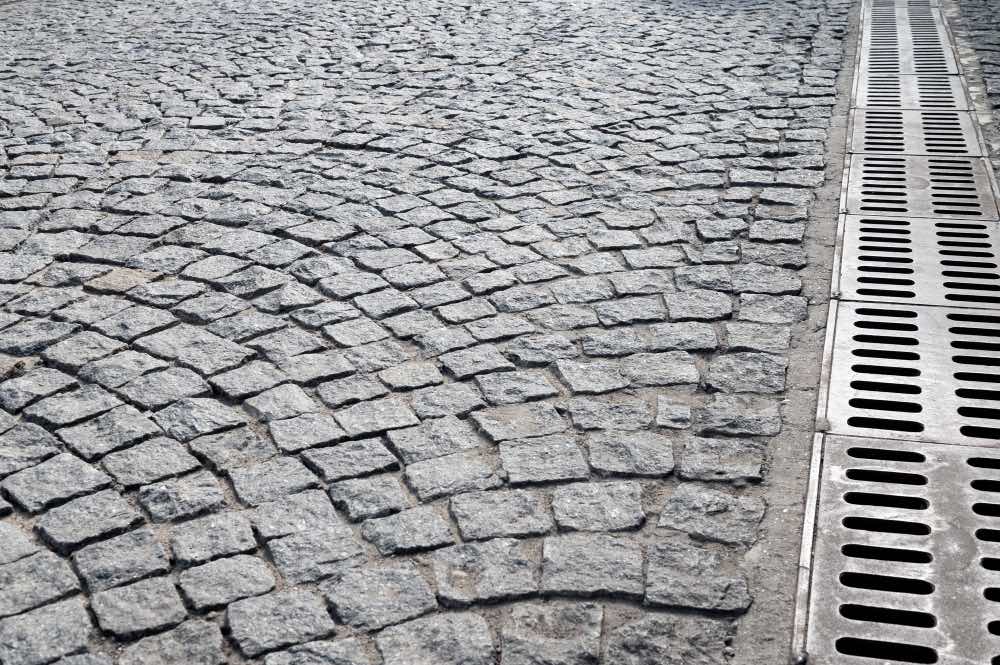
Key Points
- Curb drains remove surface water from parking lots and roadways before it causes damage.
- Failures lead to flooding, erosion, pavement deterioration, and safety hazards.
- Early inspection and maintenance prevent costly drainage and pavement repairs.
What Are Curb Drains?
Curb drains are drainage inlets built into curbs along parking lots, roadways, and drive lanes. Their purpose is to capture surface runoff flowing through the gutter and direct it into underground stormwater systems.
By removing water at pavement level, curb drains prevent ponding, reduce erosion, and protect asphalt and concrete surfaces from long-term water damage.
How Curb Drains Work
Curb drains collect water moving along the gutter line and funnel it through an inlet opening in the curb. From there, water enters underground pipes that carry it away from paved areas and into stormwater infrastructure.
When curb drains are properly sloped, unobstructed, and structurally sound, they keep paved surfaces clear of standing water even during heavy rainfall.
Why Curb Drains Fail
Curb drain failures usually develop gradually. Small issues can escalate quickly when heavy rainfall overwhelms a compromised system.
| Common Cause | What Happens |
|---|---|
| Debris buildup | Water flow becomes restricted or blocked |
| Cracked concrete | Water leaks and erodes surrounding soil |
| Improper grading | Water bypasses the drain and ponds |
| Pipe collapse or separation | Drainage failure beyond the curb inlet |
In regions with frequent or intense rainfall, minor defects can turn into major drainage failures in a short period of time.
Signs a Curb Drain Is Not Working Properly
Drainage problems are often visible on the pavement surface before underground issues are discovered.
Common warning signs include persistent ponding after rain, erosion or soil washout near curbs, cracking or spalling around drain openings, and repeated flooding complaints from tenants or visitors.
Ignoring these signs allows water to damage pavement edges, weaken base layers, and increase slip-and-fall or vehicle-related risks.
How Drainage Failures Affect Pavement and Safety
Standing water is one of the most damaging conditions for asphalt and concrete surfaces. When water is not removed efficiently, it penetrates pavement edges, accelerates cracking, and weakens the underlying base.
| Drainage Issue | Resulting Damage |
|---|---|
| Standing water | Slip-and-fall hazards |
| Repeated ponding | Accelerated asphalt cracking |
| Soil erosion | Pavement edge collapse |
| Overflow runoff | Damage to nearby structures |
Effective curb drainage reduces both maintenance costs and liability exposure.
Curb Drain Repair and Maintenance Options
Professional solutions depend on the cause and severity of the problem. Common repairs include debris removal and cleaning, concrete patching around inlets, pipe lining or replacement, and localized regrading to restore proper water flow.
In some cases, correcting pavement slope near the drain solves the issue without structural replacement. Temporary fixes often fail because they do not address blocked pipes, deteriorated concrete, or improper grading.
Routine inspections and preventive maintenance are the most reliable way to avoid emergency drainage repairs.
FAQs About Curb Drains
How often should curb drains be inspected?
At least once per year and after major storm events.
Can clogged curb drains damage asphalt?
Yes. Standing water accelerates cracking, base failure, and pavement edge deterioration.
Are curb drain repairs disruptive?
Most repairs are localized and can be completed quickly without major traffic disruption.
Do drainage problems increase liability?
Yes. Poor drainage increases the risk of slip-and-fall incidents, vehicle damage, and property claims.