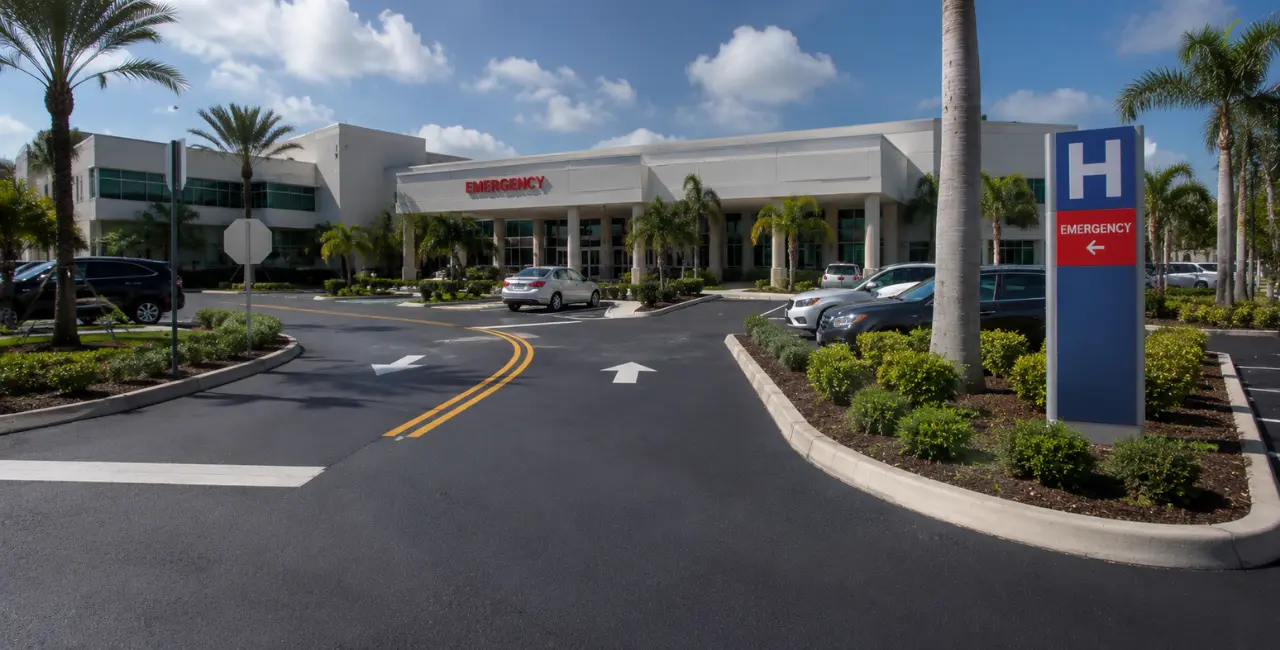
Medical facilities in Miami – such as hospitals, urgent care centers, outpatient clinics, and specialty practices – operate under constant pressure to provide safe, efficient, and accessible environments for patients and staff. While much attention is placed on medical equipment and internal infrastructure, exterior pavement conditions are often overlooked.
Parking lots, access roads, ambulance lanes, and pedestrian pathways are critical components of healthcare facility operations. When these surfaces deteriorate, they can create safety hazards, reduce accessibility, and negatively impact patient experience.
For healthcare properties in South Florida, professional asphalt maintenance services such as those provided by Southern Asphalt Engineering are essential to ensure safe and reliable facility access year-round.
Why Are Parking Lots and Roadways Critical for Medical Facilities?
Unlike typical commercial properties, medical facilities must accommodate a continuous flow of patients, emergency vehicles, staff, and delivery services. This constant usage places significant stress on exterior pavement systems.
Well-maintained parking lots and roadways are essential because they:
- Ensure safe access for patients and emergency vehicles
- Support ADA-compliant mobility requirements
- Reduce liability risks associated with trip-and-fall accidents
- Improve traffic flow during peak hours
- Enhance overall patient experience and facility reputation
In healthcare environments, pavement conditions directly influence operational efficiency and safety outcomes.
What Happens When Medical Facility Pavement Is Poorly Maintained?
When asphalt surfaces deteriorate, medical facilities face both operational and legal risks. Common issues include:
- Potholes that damage vehicles and create safety hazards
- Cracked sidewalks that increase trip-and-fall incidents
- Poor drainage leading to standing water and slip risks
- Uneven surfaces that hinder wheelchair and stretcher movement
- Confusing traffic flow due to faded striping and markings
For hospitals and urgent care centers, even minor pavement defects can create significant disruptions, particularly for emergency response vehicles that require smooth and unobstructed access.
The Impact of Pavement Conditions on Patient Experience
First impressions matter in healthcare settings. Patients often form opinions about a facility before they even enter the building, based on parking availability, accessibility, and overall exterior condition.
Poor pavement conditions can lead to:
- Patient frustration due to difficult parking navigation
- Increased stress for emergency arrivals
- Perception of neglect or lack of facility maintenance
- Accessibility challenges for elderly or disabled patients
- Delays in emergency drop-off and pickup processes
In contrast, well-maintained asphalt surfaces create a sense of organization, professionalism, and care, reinforcing trust in the medical facility.
Why Miami’s Climate Demands Frequent Asphalt Maintenance
Miami’s tropical climate presents unique challenges for asphalt infrastructure. Medical facility parking lots and roadways are exposed to:
- Heavy rainfall and flooding events
- High humidity and moisture infiltration
- Intense UV radiation causing asphalt oxidation
- Frequent thermal expansion and contraction
- High daily traffic loads from vehicles and ambulances
These environmental conditions accelerate pavement deterioration, making preventative maintenance essential rather than optional.
Common Asphalt Maintenance Services for Medical Facilities
Medical facilities require a combination of asphalt services to maintain safe and functional access areas.
Sealcoating
Sealcoating protects asphalt surfaces from moisture penetration, UV damage, and oxidation. It also improves appearance by restoring a uniform black finish.
Crack Filling
Crack filling prevents water infiltration into the pavement base, reducing the risk of pothole formation and structural weakening.
Asphalt Patching
Localized damage such as potholes or surface failures can be quickly repaired through asphalt patching, restoring safety and functionality.
Striping and Marking
Clear pavement markings are essential for traffic flow, ADA compliance, and emergency vehicle navigation.
Resurfacing and Overlay
When pavement shows widespread wear but retains structural integrity, resurfacing provides a cost-effective way to restore the surface without full reconstruction.
ADA Compliance and Accessibility Requirements
Medical facilities are legally required to maintain ADA-compliant access routes, including parking spaces, ramps, and pedestrian pathways. Poor pavement conditions can lead to non-compliance issues and potential legal liability.
Proper asphalt maintenance ensures:
- Smooth wheelchair access routes
- Clearly marked handicap parking spaces
- Safe slope transitions for ramps
- Stable walking surfaces for patients with mobility challenges
Failure to maintain compliance can result in fines, lawsuits, and reputational damage.
Medical Facility Pavement Condition Overview
| Pavement Condition | Typical Issues | Recommended Action |
| Excellent | Smooth, well-marked, no visible damage | Routine maintenance |
| Good | Minor cracks, slight fading | Sealcoating and crack repair |
| Fair | Moderate cracking, surface wear | Resurfacing or patching |
| Poor | Potholes, drainage issues, uneven surfaces | Immediate repair or reconstruction |
This overview highlights how quickly pavement conditions can impact healthcare operations if maintenance is delayed.
How Poor Pavement Affects Emergency Response Vehicles
Emergency access is one of the most critical functions of medical facility pavement systems. Ambulances, fire trucks, and patient transport vehicles require smooth and direct access routes.
Damaged pavement can result in:
- Slower ambulance response times
- Vehicle damage during emergency transport
- Difficulty maneuvering large emergency vehicles
- Increased risk during patient loading and unloading
In healthcare environments, even seconds matter, making pavement reliability a key operational priority.
Benefits of Well-Maintained Asphalt for Medical Facilities
Proper asphalt maintenance provides multiple benefits beyond safety and appearance.
Improved Safety
Reduces risks of slips, trips, falls, and vehicle accidents across the facility.
Enhanced Efficiency
Supports smooth traffic flow for patients, staff, and emergency services.
Better Patient Perception
Creates a clean, organized, and professional first impression.
Reduced Liability Exposure
Minimizes risk of injury-related claims due to unsafe pavement conditions.
Long-Term Cost Savings
Preventative maintenance reduces the need for costly full-scale reconstruction.
Why Professional Asphalt Contractors Matter
Medical facilities require specialized asphalt solutions that prioritize safety, compliance, and durability. Professional contractors understand how to design maintenance plans that minimize disruption while maximizing performance.
Experienced providers like Southern Asphalt Engineering deliver services tailored to high-traffic healthcare environments, ensuring:
- Minimal disruption to patient access during repairs
- High-quality materials suited for heavy vehicle loads
- Compliance with ADA and safety standards
- Long-term durability in Miami’s climate conditions
Why Healthcare Facilities Need Proactive Asphalt Maintenance
Well-maintained parking lots and roadways are essential for medical facilities in Miami. They ensure safe patient access, support emergency response efficiency, and maintain compliance with accessibility regulations.
Neglecting asphalt maintenance can lead to safety hazards, operational disruptions, and increased liability risks. On the other hand, proactive care enhances patient experience, improves facility reputation, and reduces long-term costs.
For healthcare providers, investing in professional asphalt maintenance is not just an infrastructure decision – it is a critical component of delivering safe and effective patient care.
FAQs
Why is parking lot maintenance important for medical facilities?
It ensures safe access for patients, staff, and emergency vehicles while reducing accidents and improving overall facility efficiency.
How does pavement condition affect patient experience?
Poor pavement can create accessibility issues, delays, and negative first impressions, while smooth surfaces improve comfort and trust.
What asphalt services do medical facilities need most?
Common services include sealcoating, crack filling, pothole repair, resurfacing, and line striping for ADA compliance.
How often should medical parking lots be maintained in Miami?
Due to weather and heavy traffic, inspections should be annual, with sealcoating every 2–3 years and repairs as needed.
Can poor pavement create legal risks for hospitals and clinics?
Yes, unsafe surfaces can lead to slip-and-fall accidents, ADA violations, and liability claims against the facility.