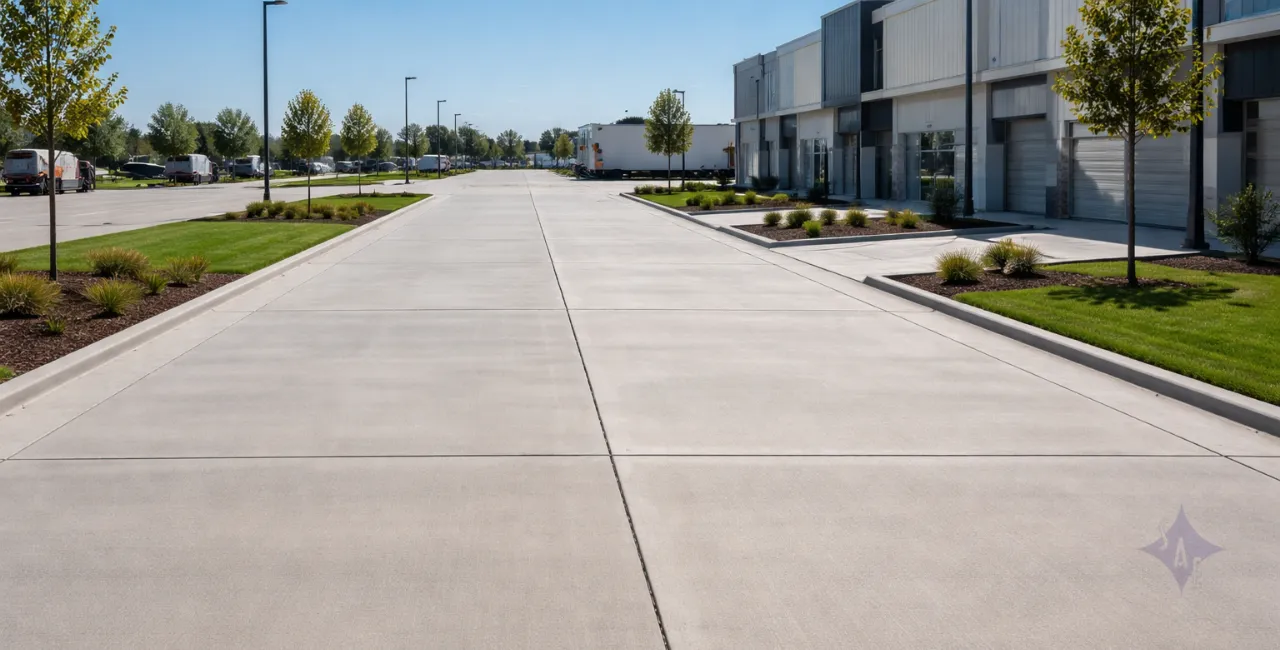
Concrete surfaces in community spaces such as sidewalks, walkways, and curbs play a vital role in safety, accessibility, and overall property value. Over time, these surfaces can deteriorate due to weather exposure, heavy use, and structural issues. This makes concrete restoration an essential service for property managers, HOAs, and commercial developments.
While homeowners often focus on 6” Concrete Driveways, the same principles of durability and reinforcement apply to shared community infrastructure. Proper concrete driveway installation, sidewalk repair, and concrete driveway construction techniques ensure long-lasting results across all concrete surfaces.
Investing in professional restoration services helps maintain safe walkways, prevent liability risks, and extend the life of concrete structures.
What Does Concrete Restoration in Community Areas Mean?
Concrete restoration refers to repairing, resurfacing, or replacing damaged concrete surfaces in shared spaces such as:
- Sidewalks
- Walkways
- Curbs
- Community drive lanes
- Entry paths and access areas
Unlike new installations, restoration focuses on improving existing structures through techniques like crack repair, resurfacing, leveling, and reinforcement.
Commercial driveway contractors and restoration specialists assess the condition of concrete surfaces and recommend solutions such as:
- Crack sealing
- Surface patching
- Slab leveling
- Full concrete driveway replacement (if necessary)
These services help maintain a durable concrete driveway and surrounding infrastructure within residential and commercial communities.
Why Is Concrete Restoration Important?
Concrete restoration ensures safe, durable, and long-lasting surfaces in community areas while preventing costly replacements.
Key benefits include:
- Improves pedestrian safety
- Reduces liability risks
- Extends concrete lifespan
- Enhances curb appeal
- Prevents structural damage
In fact, studies show that nearly 25% of sidewalks are in fair to poor condition, highlighting the importance of timely maintenance and restoration.
Why Do Sidewalks, Walkways, and Curbs Deteriorate?
Concrete deterioration is caused by a combination of environmental and structural factors.
Weather Exposure
Sun, rain, and temperature changes can cause expansion and contraction, leading to cracks and surface damage.
Water Infiltration
Water entering small cracks weakens the concrete base and accelerates deterioration.
Soil Movement
Shifting soil beneath concrete slabs can cause uneven surfaces and structural instability.
Heavy Loads
Just like heavy duty concrete driveway systems, sidewalks and curbs must handle weight and stress. Without proper reinforcement, damage occurs over time.
Tree Roots and Ground Pressure
Roots can lift concrete slabs, creating uneven surfaces and trip hazards.
Concrete Restoration vs Replacement: What’s the Difference?
Choosing between repair and replacement depends on the severity of damage.
| Condition | Recommended Solution | Cost Efficiency |
| Minor cracks and surface wear | Crack filling & sealing | Very cost-effective |
| Uneven slabs | Concrete leveling | Moderate cost |
| Surface deterioration | Resurfacing | Cost-effective |
| Severe structural damage | Full replacement | Higher cost but necessary |
According to industry estimates, concrete repair costs range from $3 to $20 per square foot, depending on the damage and repair method.
Concrete Restoration Statistics for Community Infrastructure
| Metric | Industry Insight |
| Sidewalks rated fair to poor condition | ~25% |
| Increase in lifespan with sealing | 20–30% longer |
| Slip-and-fall injuries linked to uneven surfaces | 20–30% cases |
| Maintenance cost savings with early repair | Up to 50% |
| Average lifespan of maintained concrete | 30–40 years |
Regular maintenance significantly reduces long-term costs and improves safety across community spaces.
What Are the Benefits of Restoring Community Concrete Surfaces?
Restoring sidewalks, walkways, and curbs provides multiple advantages for property owners and managers.
Improved Safety
Uneven concrete surfaces are a major cause of accidents. Even small height differences can create trip hazards.
Reduced Liability
Damaged walkways can lead to legal risks. Proper maintenance helps prevent accidents and liability claims.
Enhanced Appearance
Well-maintained concrete improves the overall appearance of a community or commercial property.
Longer Lifespan
Restoration extends the life of concrete surfaces, delaying the need for full replacement.
Cost Savings
Preventive maintenance reduces the need for expensive reconstruction projects.
How Does the Concrete Restoration Process Work?
Professional restoration follows a structured process to ensure long-lasting results.
Step 1: Inspection and Assessment
Contractors evaluate cracks, uneven surfaces, and structural issues.
Step 2: Surface Preparation
Cleaning removes debris, oil, and contaminants that affect repair quality.
Step 3: Crack Repair and Patching
Small cracks are sealed to prevent water infiltration.
Step 4: Leveling and Stabilization
Sunken slabs are lifted and stabilized using modern techniques.
Step 5: Resurfacing or Replacement
If necessary, surfaces are resurfaced or replaced to restore durability.
Step 6: Sealing and Protection
Protective coatings are applied to extend lifespan and improve appearance.
Sealing alone can increase surface life by 20–30%, making it a critical step in restoration.
What Is the Role of Reinforcement in Long-Lasting Concrete?
Just like reinforced concrete driveway systems, community concrete surfaces benefit from reinforcement techniques.
Reinforcement improves:
- Structural strength
- Load distribution
- Crack resistance
- Long-term durability
Using reinforcement during concrete driveway construction or sidewalk replacement ensures better performance under stress.
When Should You Consider Concrete Replacement?
In some cases, restoration may not be sufficient.
Signs that replacement is needed include:
- Deep structural cracks
- Large uneven sections
- Severe surface deterioration
- Repeated repair failures
- Drainage issues
In such situations, a full concrete driveway replacement or sidewalk reconstruction may be the best solution.
How to Choose the Right Concrete Contractors?
Hiring an experienced contractor or restoration specialist, like Southern Asphalt Engineering, is essential for high-quality, long-lasting results.
Look for contractors who offer:
- Experience with community and commercial projects
- Knowledge of safety and compliance standards
- Advanced restoration techniques
- High-quality materials and equipment
- Proven track record
Professional contractors ensure that restoration projects are completed efficiently and meet long-term durability goals.
FAQs
What is concrete restoration for sidewalks and walkways?
Concrete restoration involves repairing cracks, leveling uneven slabs, and resurfacing damaged sidewalks, walkways, and curbs to improve safety and extend lifespan.
When should concrete sidewalks be repaired or replaced?
Sidewalks should be repaired when cracks, uneven surfaces, or minor damage appear. Replacement is recommended for severe structural damage or repeated failures.
How long does concrete restoration last?
With proper maintenance, restored concrete surfaces can last 20–30 years or more, depending on usage and environmental conditions.
Is concrete restoration cheaper than replacement?
Yes, restoration is typically more cost-effective than full replacement, especially for minor to moderate damage.
What causes damage to sidewalks and curbs?
Common causes include weather exposure, water infiltration, soil movement, tree roots, and heavy usage over time.
How can I maintain sidewalks and walkways after restoration?
Regular cleaning, sealing, and early crack repairs help extend the lifespan of restored concrete surfaces.
Do you offer concrete driveway and community restoration services together?
Yes, many contractors, like Southern Asphalt Engineering, provide both residential concrete driveway and community concrete restoration services for complete property maintenance.