Commercial parking lots must provide safe, accessible parking for people with disabilities while meeting the requirements of the Americans with Disabilities Act (ADA). From determining the minimum number of accessible parking spaces to installing proper signage and maintaining accessible routes, property owners need to consider several important factors when designing or upgrading their parking facilities.
Understanding ADA parking space requirements for commercial parking lots can help businesses improve accessibility, reduce compliance risks, and create a better experience for customers and employees. Professional asphalt paving, parking lot striping, and pavement maintenance also play an important role in keeping accessible parking areas clearly marked and usable.
What Are ADA Parking Requirements for Commercial Parking Lots?
The Americans with Disabilities Act establishes federal accessibility standards for public accommodations and other covered facilities. Under the 2010 ADA Standards for Accessible Design, commercial parking facilities must provide accessible parking spaces according to the total number of spaces in each parking facility.
These requirements cover shopping centers, office buildings, medical facilities, restaurants, retail stores, and other commercial properties. Accessible parking must be appropriately sized, clearly identified, and connected to an accessible route leading to an accessible entrance or destination.
Property owners should also review applicable state and local building codes, which may impose additional accessibility requirements. Meeting the minimum federal standards is an important starting point, but the overall parking layout must support practical and safe access.
How Many ADA Parking Spaces Are Required?
The number of accessible parking spaces required depends on the total capacity of each parking lot or parking structure. The 2010 ADA Standards specify the following minimum requirements under Section 208.2.
| Total Parking Spaces | Minimum Accessible Spaces Required |
| 1–25 | 1 |
| 26–50 | 2 |
| 51–75 | 3 |
| 76–100 | 4 |
| 101–150 | 5 |
| 151–200 | 6 |
| 201–300 | 7 |
| 301–400 | 8 |
| 401–500 | 9 |
| 501–1,000 | 2% of total spaces |
| 1,001 and above | 20, plus 1 for every 100 spaces or fraction thereof above 1,000 |
Source: U.S. Department of Justice
What Are the Size Requirements for ADA Parking Spaces?
Proper dimensions are essential for wheelchair access, vehicle entry, and safe movement between parked vehicles. Under Section 502 of the 2010 ADA Standards, a standard accessible car parking space must be at least 96 inches (8 feet) wide.
Van-accessible parking spaces must generally be at least 132 inches (11 feet) wide, with an adjacent access aisle at least 60 inches wide. An alternative permitted configuration allows a 96-inch-wide van space with a 96-inch-wide access aisle.
Access aisles provide additional room for wheelchair lifts, ramps, and mobility devices. They must be located beside the associated parking spaces, marked to discourage parking within them, and connected to an accessible route.
Parking lot designers must also consider slopes, surface conditions, drainage, and transitions to sidewalks. Accessible parking spaces and their access aisles generally cannot have slopes steeper than 1:48 in any direction. Smooth, stable pavement helps people using wheelchairs, walkers, and other mobility devices move safely.
ADA Parking Signs, Markings, and Accessible Routes
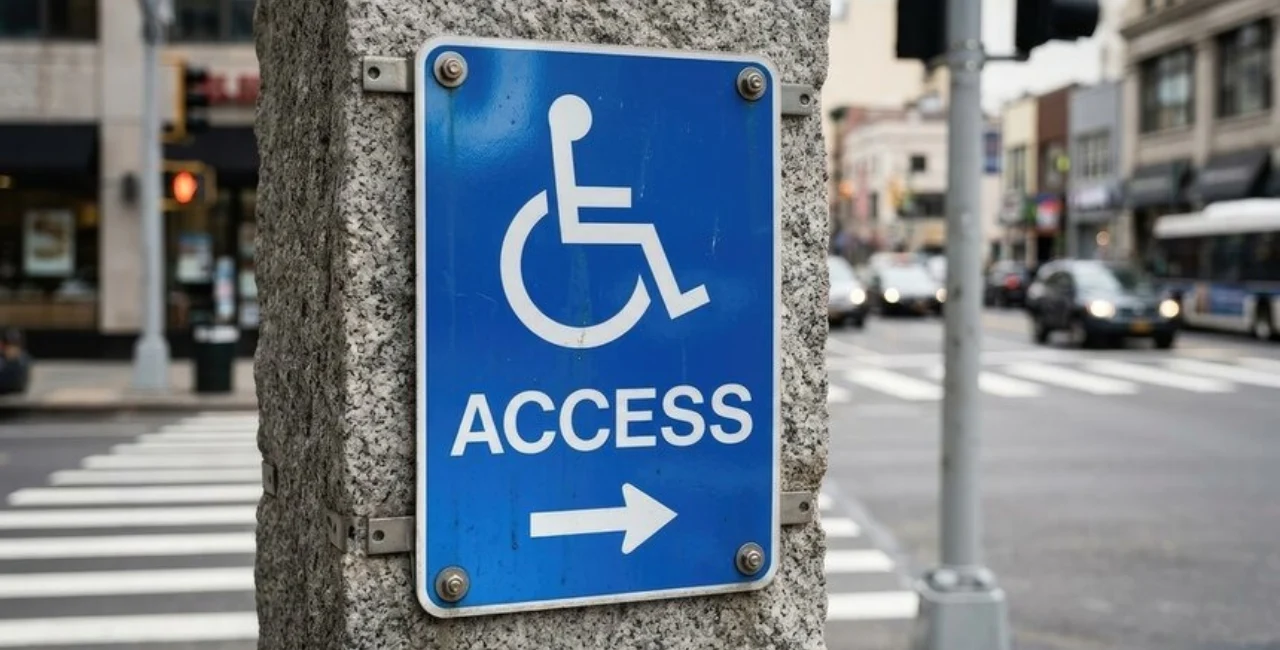
Correct signage and pavement markings make accessible parking spaces easy to identify. ADA parking spaces generally require signs displaying the International Symbol of Accessibility. Van-accessible spaces also require signage identifying them as van-accessible.
The bottom of the required parking identification signs must generally be at least 60 inches above the ground, measured to the bottom of the sign. Specific signage requirements and exceptions should be checked against the applicable ADA provisions.
Parking lot striping should clearly define accessible spaces and access aisles. Blue pavement markings are commonly used to identify accessible parking, although federal ADA standards do not universally mandate a particular pavement-marking color.
An accessible route must connect the parking area to an accessible building entrance or other required destination. Routes should remain clear of obstructions, abrupt level changes, and unsafe pavement conditions. Where sidewalks, curb ramps, and pedestrian crossings are included, they should be evaluated as part of the complete accessibility plan.
Why Asphalt Paving and Parking Lot Maintenance Matter
Even a correctly designed accessible parking lot can become difficult to use when pavement deteriorates. Potholes, uneven asphalt, faded striping, standing water, and damaged access aisles can interfere with safe access and reduce the visibility of designated spaces.
Routine parking lot inspections help property managers identify these issues before they become larger problems. Depending on the condition of the pavement, recommended work may include asphalt patching, resurfacing, sealcoating, concrete repairs, drainage improvements, and parking lot restriping.
Southern Asphalt Engineering provides commercial paving and parking lot maintenance services in Miami-Dade and Broward counties. Its services include asphalt paving, concrete curbing and gutters, parking lot striping, and industrial asphalt paving. These services can help commercial property owners maintain clearly marked parking areas and address pavement-related accessibility concerns.
With experience working on asphalt projects throughout South Florida, Southern Asphalt Engineering can be a resource for property owners planning parking lot repairs, resurfacing, or striping improvements. Property managers should ensure that any proposed work preserves required accessible dimensions, slopes, access aisles, and pedestrian routes.
How to Maintain ADA Compliance in Commercial Parking Lots
Maintaining compliance requires more than installing accessible parking spaces once. Property owners should periodically inspect their facilities and address changes that affect accessibility.
Important maintenance practices include:
- Inspecting accessible parking spaces, access aisles, and pavement markings regularly.
- Repainting faded lines and replacing damaged or missing signs.
- Repairing potholes, cracks, and uneven pavement along accessible routes.
- Checking drainage to prevent standing water in parking spaces and access aisles.
- Keeping access aisles and accessible routes free of stored materials, vehicles, and other obstructions.
- Consulting qualified design professionals when changing parking layouts or reconstructing accessible areas.
Before undertaking major paving or restriping work, businesses should verify the applicable federal, state, and local requirements. Professional planning helps prevent costly rework and supports a safer parking environment for everyone.
ADA Parking Compliance and Commercial Lot Maintenance
ADA parking space requirements for commercial parking lots address accessible-space quantities, dimensions, van accessibility, signage, access aisles, and pedestrian routes. Meeting these standards helps businesses make their properties more inclusive while supporting safer and more practical parking facilities.
Combining compliant parking lot design with regular asphalt maintenance and clearly visible striping helps preserve accessibility over time. For commercial property owners in South Florida, Southern Asphalt Engineering offers asphalt paving, parking lot maintenance, concrete services, and striping solutions that can support these efforts.
FAQs
How many ADA parking spaces are required in a commercial parking lot?
The number depends on the total parking spaces available. For example, a lot with 76–100 spaces requires at least four accessible spaces under federal ADA standards.
What is the standard ADA parking space size?
A standard accessible parking space must be at least 96 inches wide, with an adjacent access aisle that is generally at least 60 inches wide.
How many van-accessible parking spaces are required?
At least one of every six accessible parking spaces, or fraction of six, must be van-accessible. Specific space and access aisle dimensions must comply with ADA standards.
Are blue lines required for ADA parking spaces?
Blue markings are commonly used to identify accessible parking spaces, but federal ADA standards do not universally require a specific pavement-marking color. Signs, space markings, and access aisles must meet applicable requirements.
How can asphalt maintenance help maintain ADA parking compliance?
Regular asphalt repairs, resurfacing, and parking lot restriping help address potholes, uneven surfaces, faded markings, and other conditions that can affect accessibility. Southern Asphalt Engineering offers commercial asphalt paving and parking lot maintenance services in South Florida.